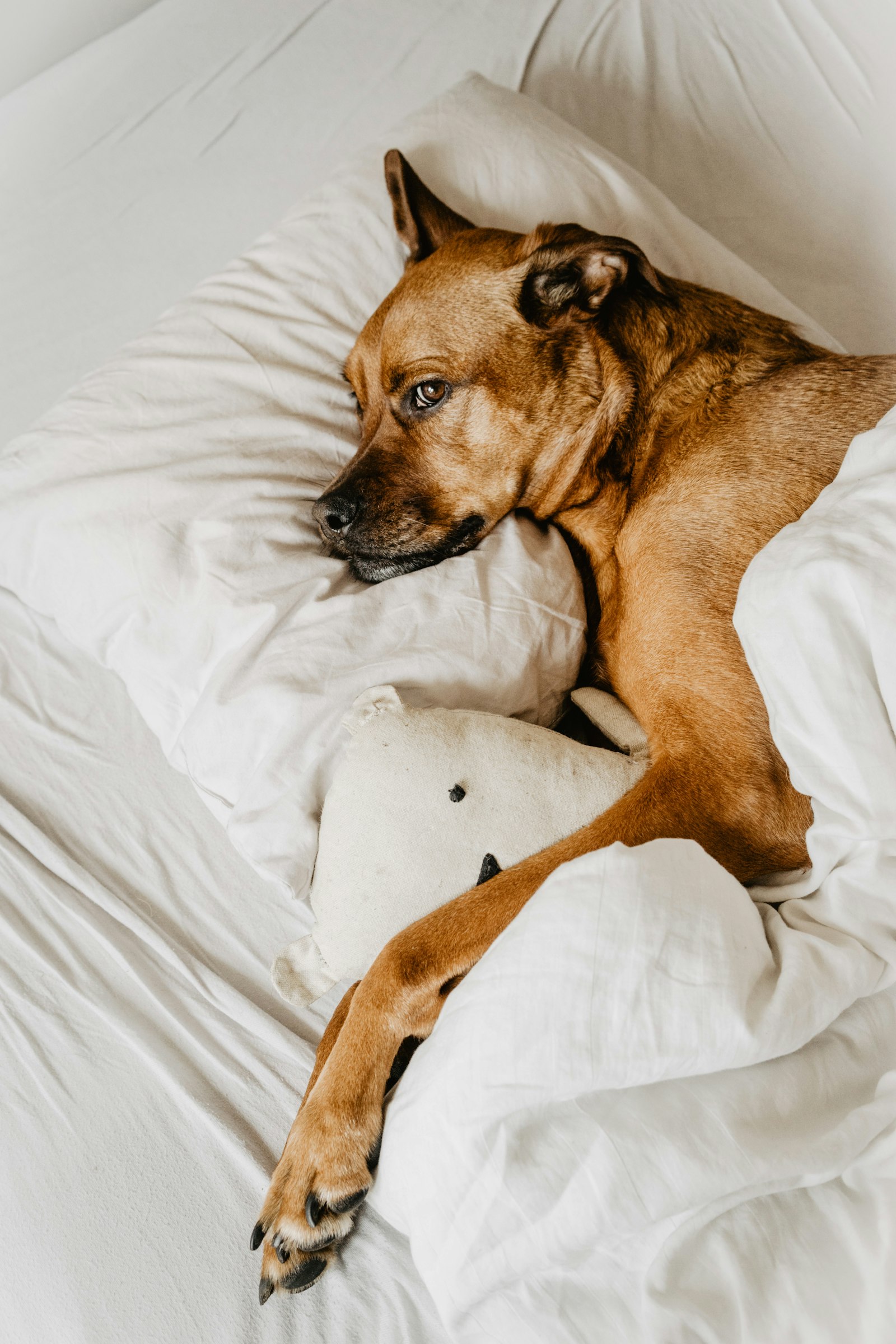
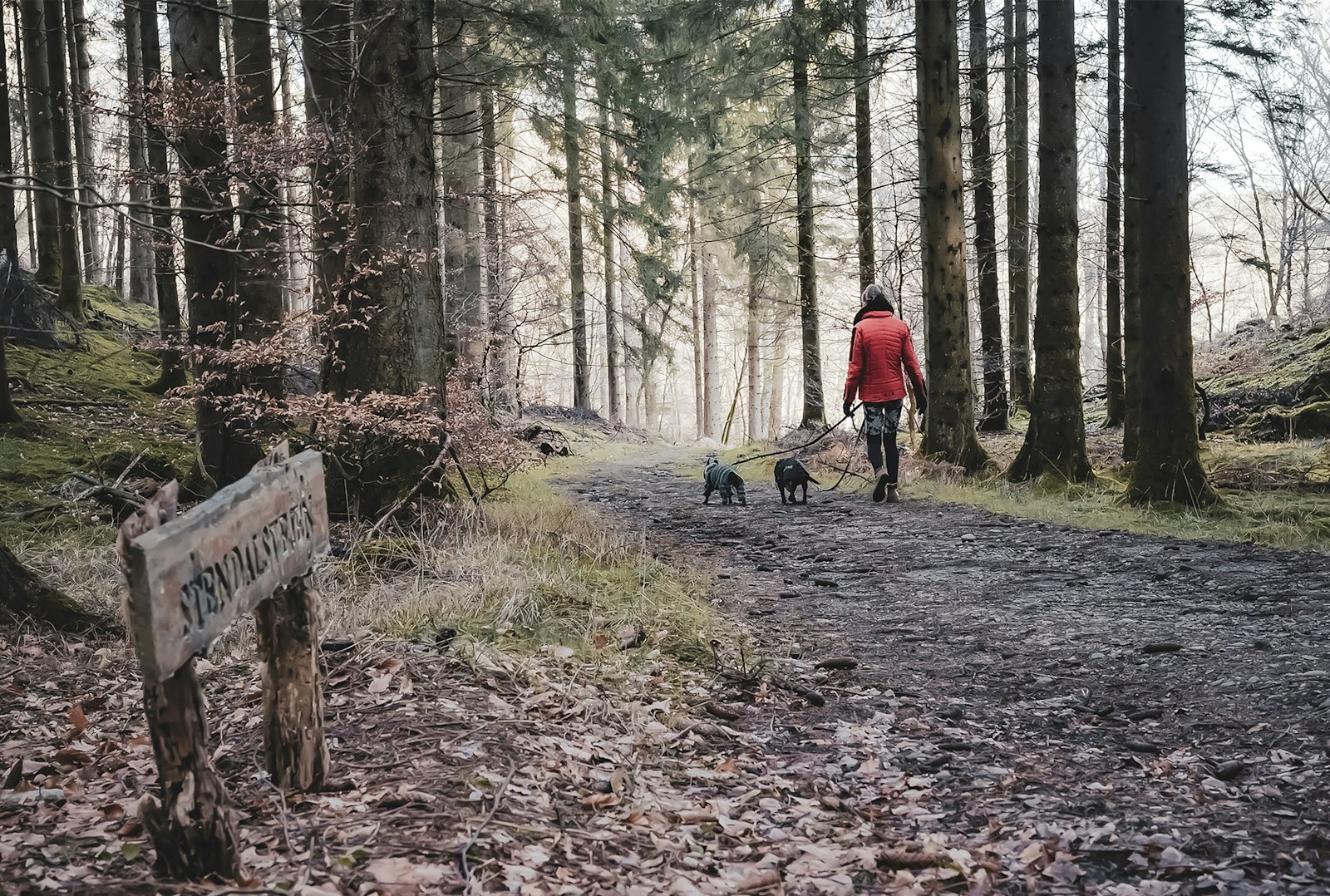
Senior dogs need shorter, slower, more frequent walks with careful attention to weather, footing, and pace. A 12-year-old lab and a 3-year-old lab should not be walked the same way. Our team adjusts every walk to the individual dog, and we track changes so you know when it is time to talk to your vet.
Dogs are considered senior at different ages depending on the breed. A giant breed like a Great Dane hits senior around 6, a lab or golden around 8 or 9, and a small breed like a Yorkie or Chihuahua closer to 10 or 11. What does not change is what senior dogs need from their walks: less intensity, more thoughtfulness, and someone paying attention to how they are actually doing along the way.
How we adjust pace and distance
The single biggest mistake we see with senior dogs is walking them the same distance and speed they walked at 4 years old. What used to be a comfortable 45-minute loop can leave a 13-year-old stiff, sore, and reluctant to move the next day.
Our walkers adjust based on the individual dog:
- Distance: shorter walks, often two 15 or 20-minute walks a day instead of one 45-minute walk
- Pace: a relaxed stroll, not a brisk trot, with time to sniff and pause
- Duration on hard surfaces: less pavement, more grass or dirt paths when possible
- Warm-up and cool-down: the first and last three minutes are slow flat walking to protect joints
Route choices that matter for senior dogs
Morris County has plenty of dog-friendly walking options, but not all of them are senior friendly. We steer senior dogs toward flat, well-shaded routes with predictable footing:
- Neighborhood sidewalks in the flatter parts of Wharton, Randolph, and Madison
- Loantaka Brook Reservation trails during off-peak hours to avoid crowds
- Grass fields at Memorial Park in Madison for low-impact sniff walks
Routes to avoid or shorten for senior dogs include steep sections of the Randolph trail system, gravel-heavy paths that are hard on arthritic paws, and hot asphalt during summer.
Weather that changes the plan
Senior dogs handle temperature swings worse than young dogs. We adjust or skip walks when:
- Pavement is over 85 degrees measured by hand or thermometer
- Wind chill drops below 20 degrees for small or thin-coated seniors
- Ice is present on any part of the route
If your senior dog needs to move but the weather is bad, we can shift to a shorter potty walk and indoor enrichment time. Ask about that when you book.
Warning signs we watch for
Our walkers are trained to notice subtle changes that can indicate a problem worth flagging to you or your vet:
- New reluctance to walk, or refusing to leave the house
- Limping that appears mid-walk and does not resolve after a short rest
- Increased panting or slowing down more than usual for the temperature
- Trouble on stairs coming home
- Sudden disinterest in familiar smells or usual stopping points
We include these in the photo report card you get after every walk, so you have a running log of how your senior dog is actually doing over time. That log has helped several clients catch orthopedic and neurological issues early.
Book a senior-friendly meet and greet
If you have a senior dog and want to talk through what a walking routine should look like at this stage of their life, call or text (908) 340-0078 or click Get Started to book your free meet and greet. We will meet your dog, watch them move, and put together a walk plan that fits where they are now.