
The 3-3-3 rule is a helpful general guide for new rescue dogs: expect roughly 3 days to start decompressing, 3 weeks to begin settling into a routine, and 3 months to reach a fuller sense of comfort and trust. It's not an exact science, but it sets realistic expectations for a process that almost always takes longer than new owners hope. Luigi and Alison have guided hundreds of families through this exact transition, drawing on their own hands-on rescue work with Save the Satos and Eleventh Hour Rescue.
The day a rescue dog comes home is usually the day new owners expect things to click. It rarely works that way, and that's normal. Luigi and Alison have brought home more rescue dogs than they can count, both personally and through their work with Save the Satos in Puerto Rico and Eleventh Hour Rescue in New Jersey, and they've built this business around what that experience taught them. Here's the guide we walk every rescue adopter through.
The 3-3-3 rule, and why it's a guide, not a promise
3 days to decompress. In the first few days, a rescue dog is often overwhelmed, overstimulated, or shut down entirely. This isn't the dog's true personality showing yet. It's a nervous system trying to process a completely new environment, new smells, new people, new sounds.
3 weeks to start settling in. Around the three-week mark, a lot of dogs start to show more of their real personality. Routines start to feel familiar. Trust starts to build, even if it's fragile.
3 months to reach fuller comfort. By three months, most dogs have a real sense of the household routine and have built genuine trust with the people around them. This is often when a dog's true temperament fully emerges, for better and sometimes for worse.
These aren't hard deadlines. Some dogs move through these stages faster, some take considerably longer, especially dogs with a harder history. Treat it as a framework for patience, not a countdown.
Set up a quiet decompression space before your dog arrives
Before your rescue dog even walks through the door, set up a dedicated quiet space, a crate, a spare room, or a gated-off corner with a bed, water, and minimal foot traffic. This gives your dog somewhere to retreat when the newness of everything gets to be too much.
Resist the urge to give your dog full run of the house immediately. A smaller, controlled space is easier for a nervous dog to feel safe in than a whole unfamiliar house at once.
Go easy on handling in the first days
New owners often want to shower a new rescue dog with affection right away, and it comes from a good place, but a lot of dogs need space more than they need cuddles in those first days. Let your dog approach you rather than constantly initiating contact. Keep handling minimal and let trust build at the dog's pace.
This is one of the biggest lessons from Luigi and Alison's work with Save the Satos: dogs coming from genuinely difficult circumstances often read a lot of well-meaning affection as pressure, not comfort, until they've had time to feel safe.
Don't force introductions to other pets
If you have other dogs or cats at home, resist rushing the introduction. A slow, supervised process, separate spaces at first, then short supervised interactions through a barrier, then brief supervised time together, works far better than hoping everyone gets along on day one.
Watch body language closely during any interaction: stiff posture, hard staring, or a tucked tail are signs to slow down, not push through.
Expect a house training reset, even with an adult dog
Even a dog who was reportedly house trained in a previous home often needs a full reset in a new environment. New smells, new schedules, and stress itself can all affect a dog's bathroom habits. Treat the first few weeks like you're house training from scratch: frequent outside trips, consistent timing, and plenty of positive reinforcement for going in the right spot.
Don't read this as a setback or a sign something's wrong. It's an expected part of the transition for a lot of rescue dogs.
The first leash walks in a new neighborhood
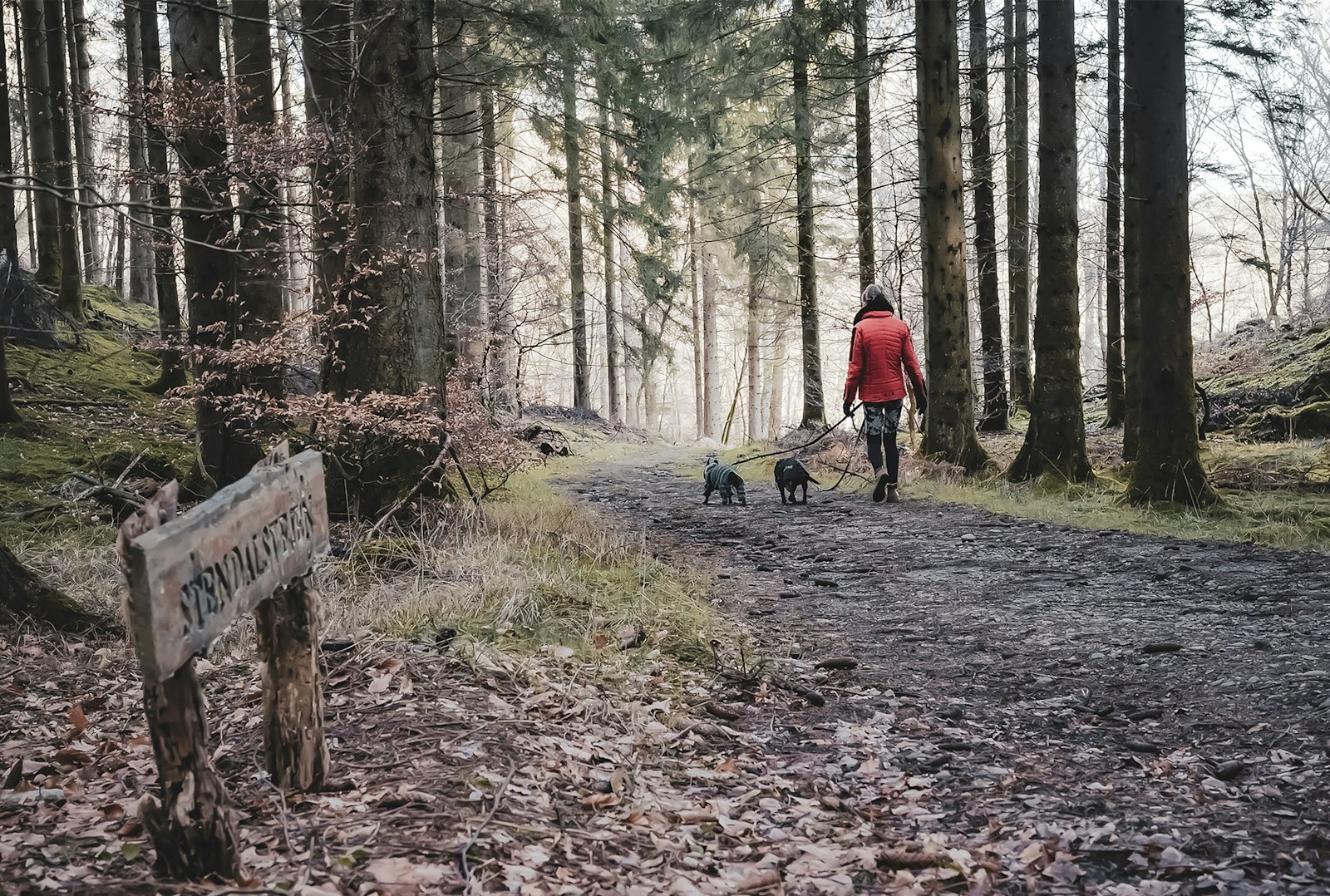
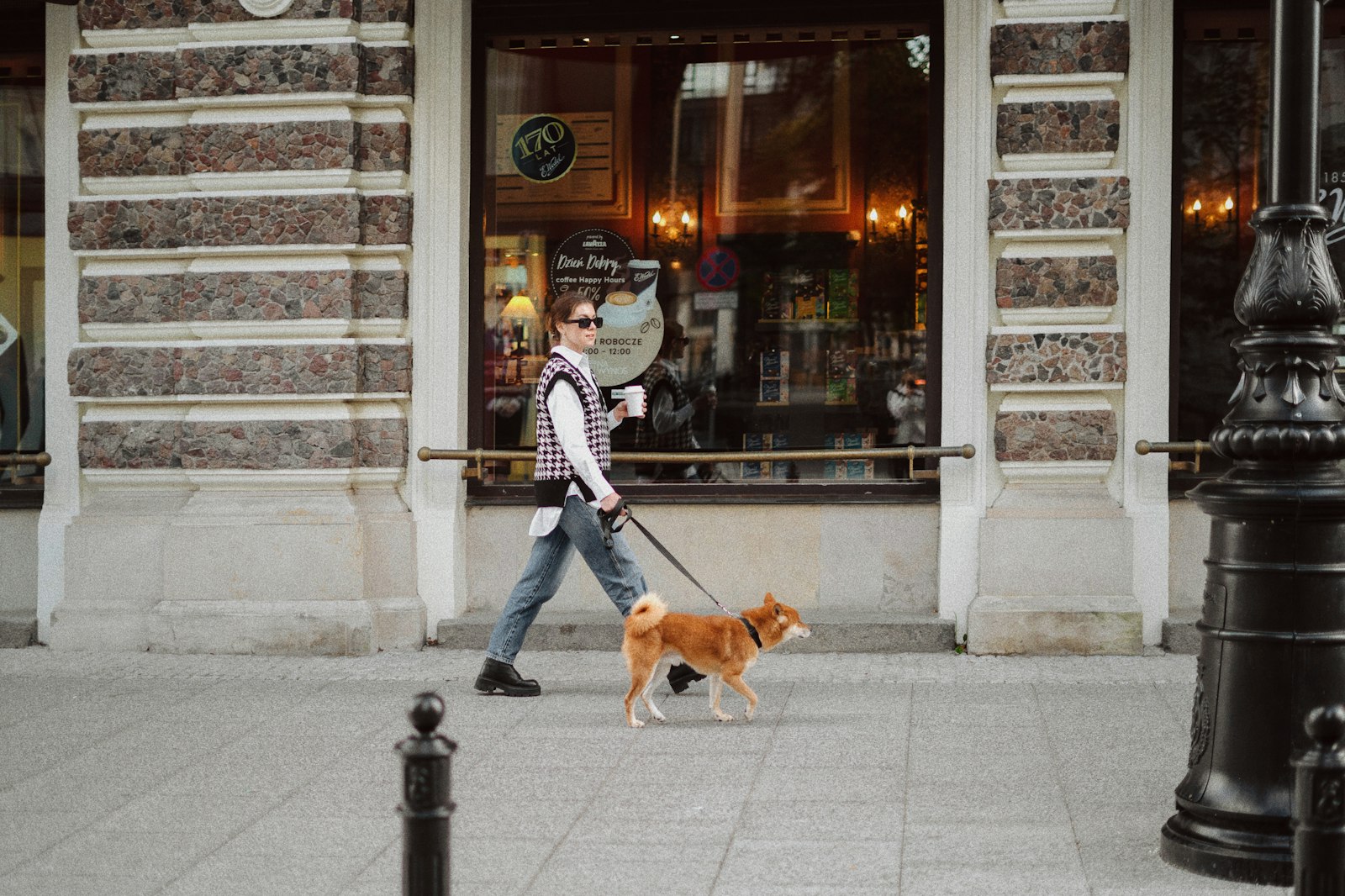
A new neighborhood is a lot of new information for a dog to process at once: new smells, new sounds, unfamiliar dogs behind fences, different traffic patterns. Keep the first walks short and low-key. This isn't the time for a long exploratory hike. It's the time for a short, calm loop that lets your dog start to build familiarity with the immediate area.
If your dog shows any signs of fear or reactivity on these early walks, that's common and manageable. It's exactly the kind of situation Luigi and Alison have handled daily for years, using distance and patience rather than pushing a dog past their comfort level.
Signs of progress to watch for
- Choosing to be in the same room as you without being called
- Eating regularly and on a consistent schedule
- Relaxed body language, loose tail, soft eyes, normal sleeping posture
- Curiosity about the yard or neighborhood instead of only fear
- Responding to their name or basic cues with more consistency
Signs it's time to bring in extra help
Most rescue dogs adjust with time, patience, and the kind of consistent handling described above. But some cases need more. If you're seeing ongoing aggression, a bite, or fear so severe your dog can't function in basic parts of daily life even after weeks of patient adjustment, it's worth a deeper behavioral assessment. This is exactly the kind of case Luigi and Alison would bring to Meredith Kiani, our ADB Certified Canine Behavior Counselor, rather than trying to figure it out on our own.
How we support new rescue adopters
A lot of our clients come to us specifically because they've just adopted a rescue dog and want a walking or training routine that fits the adjustment period, not one that pushes too hard too fast. We build walking schedules around a new dog's comfort level, use the same consistent walker so the dog isn't meeting new people during an already overwhelming time, and adjust our approach as the dog settles in.
We're fully insured and bonded, CPR and First Aid Certified, and every bit of rescue dog guidance we give clients comes directly from Luigi and Alison's years of hands-on experience with Save the Satos and Eleventh Hour Rescue, not a general playbook pulled from somewhere else.
With 155+ Five-Star Google Reviews and a team that's been serving Morris County since 2022, we've walked plenty of families through exactly this transition, and we're glad to walk you through yours too.
Ready to book? Call (908) 340-0078 or visit pupsandrecreation.com for a free meet-and-greet.
Pups and Recreation is a family-owned dog walking and pet sitting business headquartered in Wharton, NJ. Serving Morris County since 2022.